

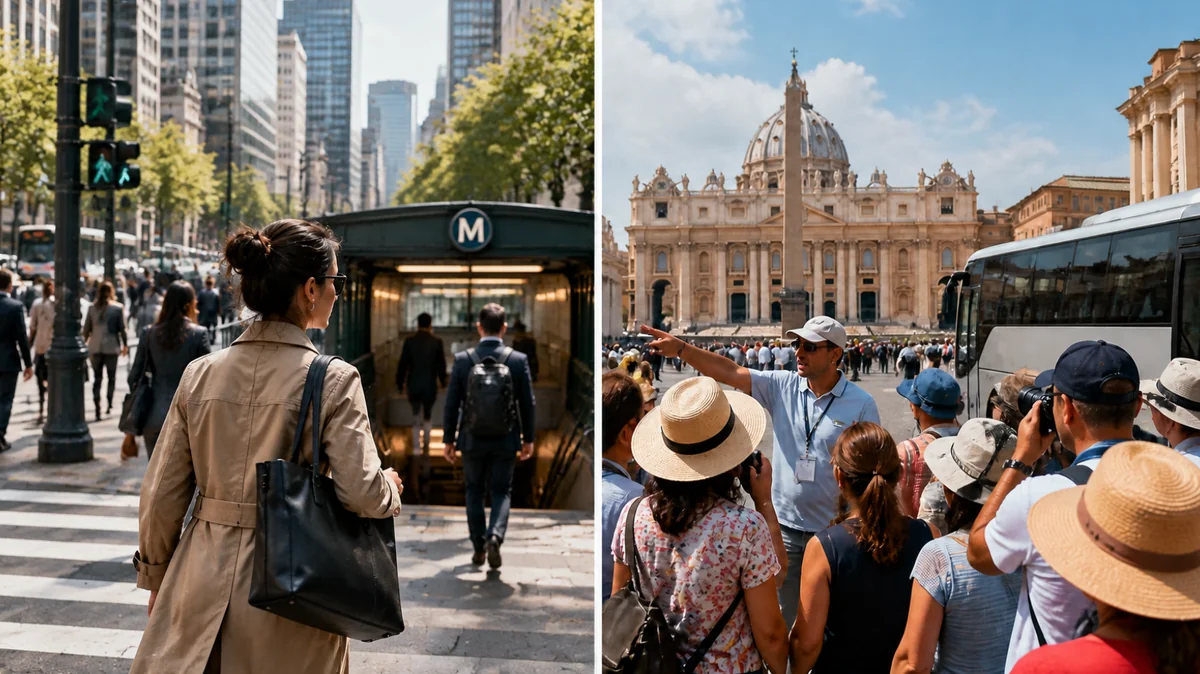
Travel vs tourism. These terms are often used interchangeably, but they aren’t quite the same thing. Travel simply means going from one place to another, while tourism involves visiting a destination for leisure, recreation, business, or other experiences. Understanding the difference helps us recognize how people explore the world, how destinations accommodate visitors, and how communities benefit from both.
What “Travel” Really Means
Travel is the act of moving from one place to another, regardless of the reason. You might be traveling for work, visiting family, attending school, or simply exploring somewhere new. Travel can take place close to home or halfway around the world. It doesn’t necessarily involve sightseeing, vacations, or recreational activities. Simply put, travel is about getting from one place to another, it is fundamentally about movement.
What “Tourism” Really Means
Tourism is a particular type of travel that involves visiting places outside your usual environment. People travel as tourists for many reasons, including vacations, recreation, cultural experiences, and business events. Tourism also supports a wide range of businesses, including hotels, restaurants, attractions, transportation providers, and tour operators.
While travel focuses on the journey, tourism places greater emphasis on the destination and the experiences it offers.
Tourism is about experiencing a place, not just moving through it.
Why the Distinction Matters for Communities
Travel and tourism both influence how communities develop and provide services. Transportation systems, roads, airports, and public facilities serve residents as well as visitors. However, tourism adds another layer of complexity by creating demand for accommodations, restaurants, attractions, and recreational opportunities. These businesses contribute to local economies and provide employment.
Understanding the complexities of tourism and what visitors expect from a destination helps communities and Destination Marketing Organizations (DMOs) make better decisions about infrastructure, services, and accessibility.
Accessibility Matters in Both Travel and Tourism
Whether someone is traveling for business, visiting family, or planning a vacation, accessibility can make the difference between an enjoyable experience and one filled with unnecessary obstacles. Accessible transportation, accommodations, attractions, and recreational equipment allow more people to participate in the experiences a destination offers.
For beach destinations, something as simple as providing a properly maintained beach wheelchair can make an enormous difference in someone’s ability to enjoy the shoreline. Accessibility shouldn’t be an afterthought. It should be part of how destinations welcome visitors.
Final Thoughts
Travel is about the journey. Tourism is about the experiences we have along the way. Both offer opportunities to explore, connect with others, and discover places beyond our everyday surroundings. Understanding the difference helps communities recognize what visitors need and how they can create better experiences for everyonet.