

Protecting Your Investment
Purchasing a beach wheelchair is an investment in accessibility, mobility, and outdoor recreation. Whether the wheelchair belongs to an individual, a family, a resort, or a public beach access program, regular maintenance helps protect that investment and keeps the equipment ready for use.
Beach wheelchairs operate in environments that can be especially demanding on equipment. Sand, saltwater, moisture, and frequent use can affect wheels, bearings, brakes, and other components. Understanding basic beach wheelchair maintenance is an important part of choosing and owning the right equipment.
Why Beach Wheelchair Maintenance Matters
A beach wheelchair may look perfectly serviceable while developing problems that affect its performance. Tires can lose pressure, sand can accumulate around moving parts, and corrosion can develop on susceptible components.
For an individual owner, these problems may interrupt a family outing or vacation. For a resort, park, or municipality, a poorly maintained wheelchair can mean that an advertised accessibility amenity is unavailable when a visitor needs it.
Accessibility does not end when the equipment is purchased. It depends on keeping that equipment usable.
How Do You Maintain a Beach Wheelchair?
Beach wheelchair maintenance should follow the manufacturer’s instructions and account for the conditions in which the equipment is used. A basic inspection and cleaning routine can help identify problems before they interfere with an outing.
1. Inspect Wheels and Tire Pressure
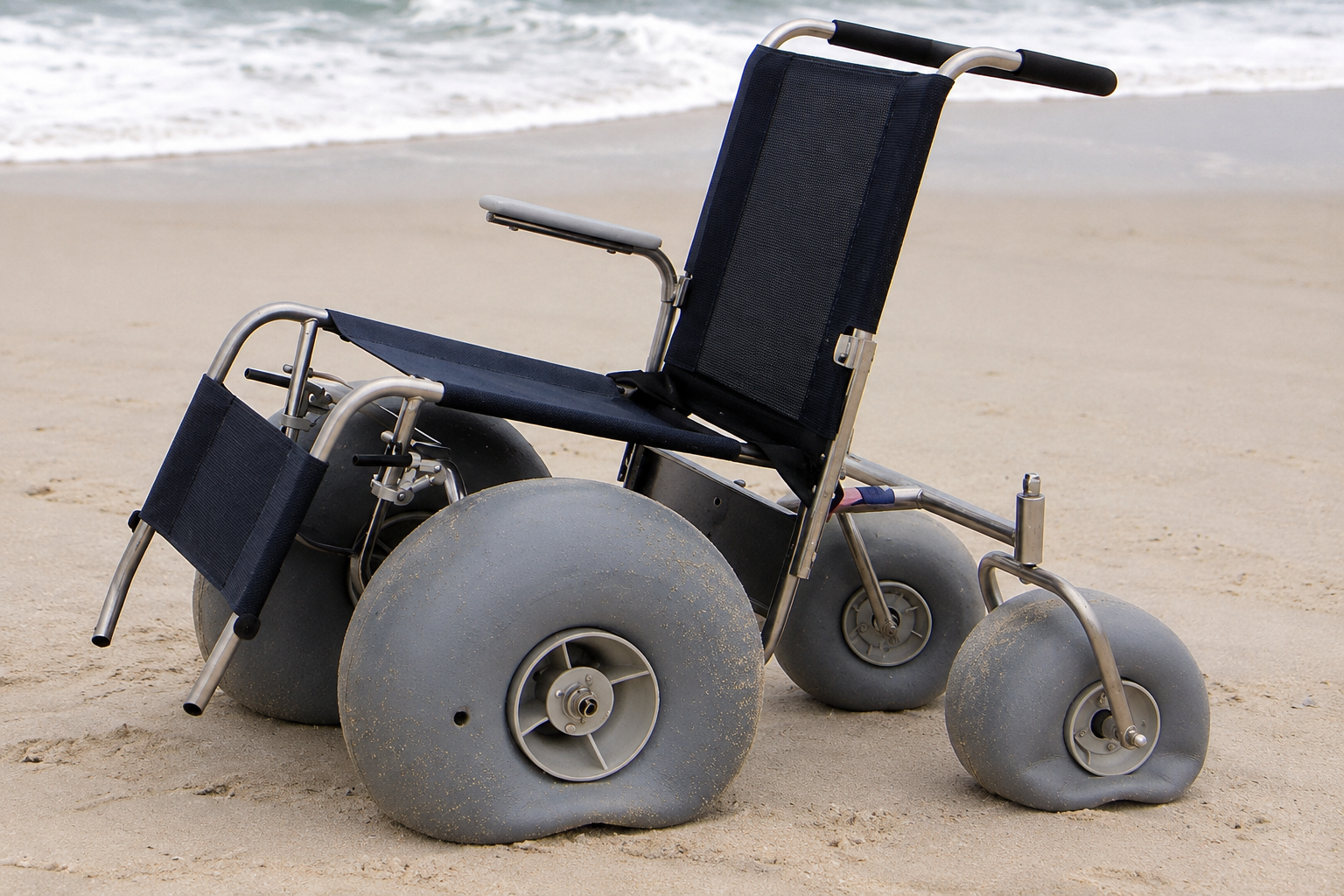
Wheels are among the most important components of a beach wheelchair. Wide, low-pressure tires help distribute weight over soft sand, reducing the tendency to sink.
Check tires for damage, wear, and proper inflation according to the wheel manufacturer’s specifications. More pressure is not necessarily better on sand. Overinflation can reduce the flotation characteristics that make low-pressure beach wheels effective.
DeBug Mobility Products uses WheelEEZ® low-pressure wheels on its beach wheelchair models. Owners should follow the applicable WheelEEZ inflation and maintenance recommendations rather than treating these wheels like conventional wheelchair tires.
2. Remove Sand and Salt Residue
Sand and saltwater can accumulate around axles, bearings, brakes, and other moving parts. After beach use, remove loose sand and rinse exposed surfaces with fresh water as directed by the manufacturer.
Allow equipment to dry before storage, paying particular attention to areas where moisture may collect. Avoid using cleaning chemicals, pressure washers, or lubricants that are not recommended for the equipment.
3. Inspect Brakes and Moving Components
Check brakes for proper operation and examine accessible fasteners, axles, and moving components for looseness, damage, or unusual wear.
Where applicable, inspect casters, reclining mechanisms, legrest adjustments, and suspension components. A chair that pulls to one side, makes unusual noises, or has difficulty rolling may require attention before further use.
Do not place equipment back into service when a safety-related component is damaged or functioning improperly.
4. Examine the Frame
Frame construction plays an important role in beach wheelchair durability. Saltwater environments can be especially demanding on metal components, making material selection an important consideration when purchasing equipment.
DeBug Mobility Products manufactures its stainless steel beach wheelchair frames using 316L marine-grade stainless steel, selected for its resistance to corrosion in harsh coastal environments.
Even corrosion-resistant stainless steel requires proper care. Routine cleaning and inspection remain important, particularly around fasteners, joints, and areas exposed to accumulated salt and sand.
5. Store Equipment Properly
When possible, store beach wheelchairs in a clean, dry, sheltered location. Avoid prolonged exposure to standing water and unnecessary weathering.
Before seasonal storage, clean and inspect the equipment, address needed repairs, and follow the manufacturer’s storage recommendations. A pre-season inspection can help ensure that the wheelchair is ready when warmer weather returns.
What Makes One Beach Wheelchair Easier to Maintain Than Another?
Maintenance requirements are worth comparing before purchasing a beach wheelchair. Two chairs may serve similar purposes but differ substantially in construction, replacement parts, and long-term service needs.
| Buying consideration | Maintenance questions to ask |
|---|---|
| Frame construction | Is the frame stainless steel, aluminum, PVC, or another material? How should it be cleaned? |
| Wheels | What inflation, inspection, and replacement procedures are required? |
| Brakes and bearings | Are the components accessible for inspection and service? |
| Adjustable features | Do reclining, tilt, or legrest mechanisms require additional inspection? |
| Replacement parts | Can individual components be replaced without purchasing an entirely new chair? |
| Manufacturer support | Are maintenance instructions and replacement components available? |
The lowest purchase price does not necessarily represent the lowest long-term cost. Durability, maintenance requirements, replacement parts, and repairability should all be considered when evaluating beach wheelchairs.
Beach Wheelchair Maintenance for Resorts, Parks, and Rental Programs
Commercial and public-use beach wheelchairs often experience more frequent use and a wider variety of operating conditions than privately owned equipment. Resorts, municipalities, parks, and beach wheelchair rental businesses should establish a routine inspection and maintenance program appropriate for their equipment and frequency of use.
A practical program should include:
- Pre-use inspections of wheels, brakes, seating, and visible components.
- Regular cleaning after exposure to sand, saltwater, and moisture.
- Scheduled inspections for wear, damage, and necessary repairs.
- Staff training in safe operation, equipment limitations, and basic maintenance.
- A record of inspections, repairs, and replacement parts.
Staff members should also know when equipment must be removed from service and whom to contact for repairs. An accessibility program is only as dependable as the equipment and people supporting it.
How Often Should a Beach Wheelchair Be Inspected?
The appropriate maintenance schedule depends on the wheelchair’s design, usage, operating conditions, and manufacturer recommendations.
For privately owned equipment, a basic inspection before each outing and cleaning after beach use are sensible practices.
For high-use commercial equipment, inspections should be incorporated into daily operations, with additional periodic maintenance based on usage and the manufacturer’s instructions.
A chair exposed to saltwater every day may require more attention than one used occasionally on dry sand.
Frequently Asked Questions About Beach Wheelchair Maintenance
Do beach wheelchairs need regular maintenance?
Yes. Beach wheelchairs operate in sand, moisture, and potentially corrosive environments. Routine cleaning and inspections help identify wear, tire-pressure problems, corrosion, and damaged components.
Should you rinse a beach wheelchair after using it in saltwater?
Generally, fresh-water rinsing is advisable for equipment exposed to saltwater, provided it is consistent with the manufacturer’s cleaning instructions. Removing salt and sand residue helps protect exposed components.
Are stainless steel beach wheelchairs maintenance-free?
No. Marine-grade stainless steel offers corrosion resistance, but wheels, bearings, brakes, fasteners, and other components still require inspection and appropriate care.
How long should a beach wheelchair last?
There is no universal service-life estimate. Longevity depends on construction, operating conditions, frequency of use, maintenance, and the availability of replacement components.
What should resorts look for when purchasing beach wheelchairs?
Resorts should consider durability, suitable seating options, wheel performance on local terrain, staff training, maintenance requirements, replacement parts, and manufacturer support.
Protecting Accessibility for the Long Term
A beach wheelchair should be evaluated not only by how well it performs when new, but also by how easily it can be maintained throughout its useful life.
For individual owners, proper maintenance helps preserve opportunities for outdoor recreation. For commercial operators and public facilities, it helps ensure that accessible equipment remains available to the people who depend on it.
Since 1998, DeBug Mobility Products has manufactured beach and all-terrain wheelchairs in Pensacola, Florida, with an emphasis on durable construction and configurations suited to different mobility needs.
Explore our beach wheelchair models and contact DeBug Mobility Products for information about equipment, replacement parts, and maintenance recommendations.